


Tonkatsu Narikura Overview

With the option to choose two out of six varieties of premium pork per teishoku (set meal), it’s hard to beat Narikura in terms of price. Considering the shop’s Michelin accolades and Tabelog top 100 (hyakumeiten) tonkatsu title, the ¥6500 price tag feels reasonable . Narikura has upheld its Tabelog bronze award for four straight years, starting in 2021, two years after opening in its current iteration.
There’s a level of confidence at play that allows Chef Seizou to keep dishes continuously in development. He hosts popups as far flung as Taiwan and Korea. Narikura even ships out his original recipe in meal-kit form, giving ambitious home chefs a chance to discover on their own what makes an excellent tonkatsu.
Tonkatsu Narikura
4-chome-33-9 Naritahigashi, Suginami City, Tokyo, 166-0015
5 minutes from Minami Asagaya Station (Marunouchi line)
Reservations required
Venue and Staff

Narikura has definitely earned the praise. Every aspect of the restaurant is considered with labcoat-level scrutiny. The owner chef, Mitani Seizou, moved the the restaurant from Takadanobaba to Minami Asagaya, a sleepy suburban neighborhood on the Marunouchi line, following the departure of its founder (he went home to Gunma).
It was a genius move. Minami Asagaya is accessible without a train-change from Tokyo’s high-earning business districts, but hidden from prying eyes. The venue itself is even turned to face away from the station, so its nameplate, bearing the same kanji used for Chef Seizou’s last name, is reserved for visitors.

Chef Seizou is the second owner, and like his predecessor, is no Tokyo native. He hails from Hiroshima, where he spent his young adulthood working in a department store. The unpretentiousness of a man who learned his craft through hard work alone is evident in his practice.
On the day we visited, three service staff were helping out. Normally, this wouldn’t be a point of note, but each of them had perfectly bobbed, dyed haircuts. Silver, auburn, and brown. Contrasted with Chef Seizou’s salt and pepper, the scene looks like Willy Wonka’s lunch break.
Cooking Method and Kodawari
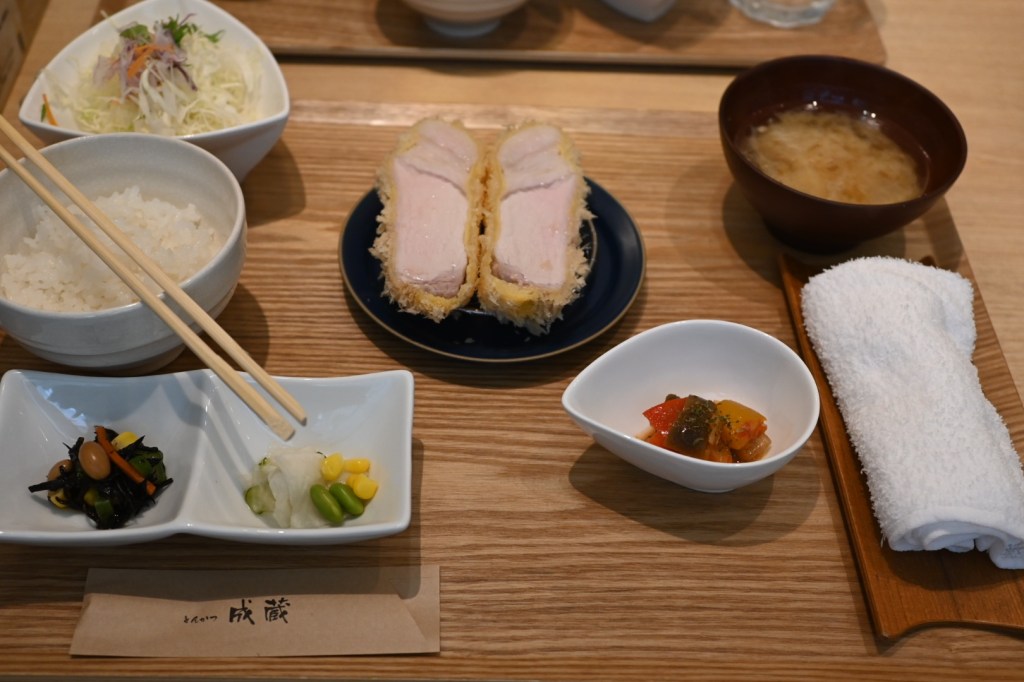
Menu development is trial and error, much of which is documented on the shop’s Instagram page. Thanks to a chance encounter at the gym, he sources his rice (the well-liked koshihikari varietal) from a farm in Kyoto.
Apparently, the pork is Tokyo-X brand, which he coaxes from fleshy pink into a white so delicate it’s hardly distinguishable from the nearly flavorless fat. In fact, his “white tonkatsu” has been said to be genre redefining.
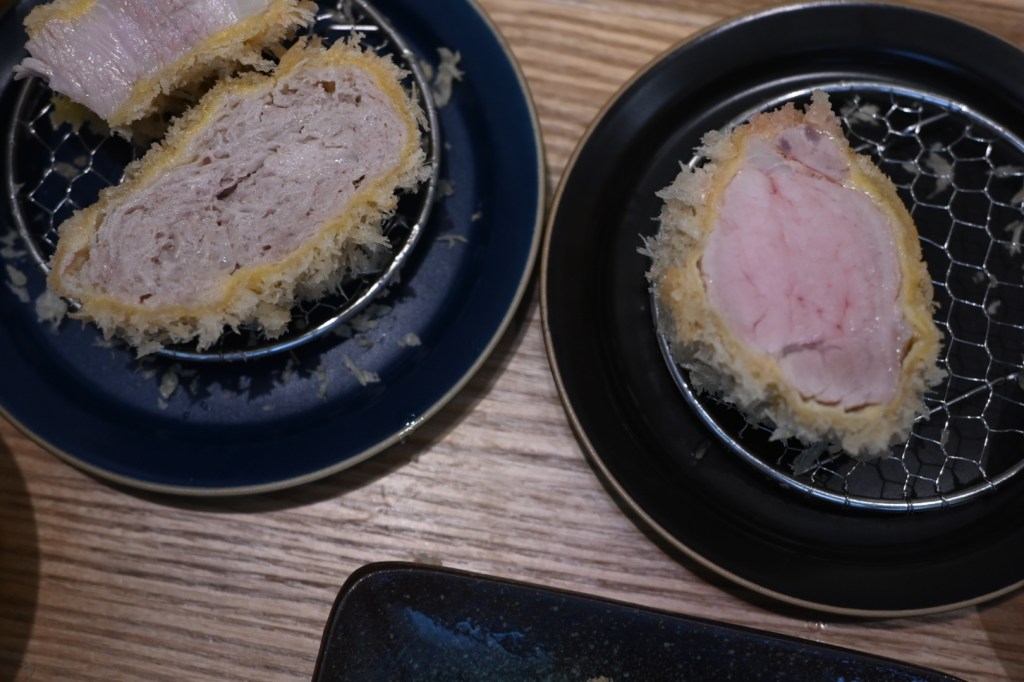
Chef Seizou studies his culinary experiments as if he were aiming to cure cancer, not perfect fried pork. Through research, he developed his signature tonkatsu technique, long-term, low-temperate frying. However, this method demanded novelty to manage dishes like menchi katsu and ebi-fry, which pose a contamination risk.
The chef even developed his own breadcrumbs, which are reportedly low-carb and formulated to keep their crunch even after a long soak in the deepfryer. He’s known for judging cook times by sound, and in the near-silence of his low-temp fry equipment, that alone is a remarkable feat.
keep reading when you subscribe…

Subscribe to continue reading
Become a paid subscriber to get access to the rest of this post and other exclusive content.
 Yolk and Crumb